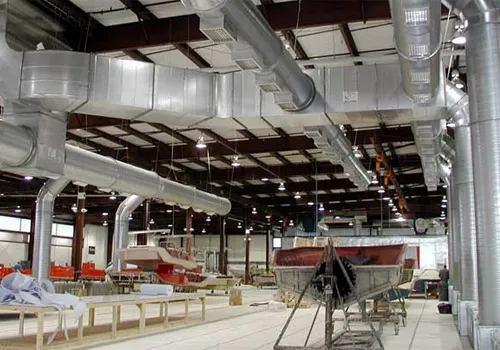
Factory Ventilation Systems
Factory Ventilation Systems: Efficiency, Health, and Energy Savings
Industrial ventilation is a critical component in maintaining worker safety, optimizing energy efficiency, and ensuring high production quality. These systems are designed to remove polluted air and supply fresh, clean air through a controlled engineering process.
Key Components of Industrial Ventilation Systems
-
Hood Systems (Exhaust Units):
-
Capture dust, fumes, vapors, and harmful gases directly at the source.
-
Constructed from durable materials like stainless steel or composite alloys.
-
-
Ventilation Ducts:
-
Efficiently transport air throughout the facility.
-
Made from galvanized steel or insulated materials to minimize energy loss.
-
-
Fans & Centrifugal Fans:
-
Ensure effective air circulation in high-pressure environments.
-
Inverter-controlled models enhance energy efficiency.
-
-
Vents & Air Diffusers:
-
Promote uniform air distribution, eliminating stagnant zones.
-
Benefits of Proper Ventilation Systems
-
Worker Health: Reduces respiratory risks by filtering hazardous particles.
-
Energy Savings: Heat recovery systems (HRV/ERV) lower operational costs.
-
Production Quality: Controls humidity and dust for consistent output.
-
Regulatory Compliance: Meets OSHA, ISO 14001, and workplace safety standards.
Critical Factors for System Selection
-
Facility size and required air exchange rate,
-
Chemical/particulate concentration in the environment,
-
Climate conditions and energy costs,
-
Maintenance accessibility and long-term durability.
Conclusion: Modern factory ventilation is not just a necessity—it’s a strategic investment in productivity and sustainability. With the right design and technology, businesses can maximize both employee comfort and operational performance.